Physical Address
304 North Cardinal St.
Dorchester Center, MA 02124


Africa is urbanising faster than any other continent, and Kenya is right at the centre of this growth. Cities like Nairobi, Mombasa, Kisumu, and Eldoret are expanding rapidly, yet access to safe, affordable, and sustainable housing remains a major challenge.
One solution gaining serious attention is modular housing, especially when paired with sustainable architectural design. Rather than building everything on-site using traditional methods, modular construction offers a smarter, faster, and more resource-efficient way to deliver quality homes — both in Kenya and across Africa.
Modular housing is a construction method where building components or complete housing units are manufactured off-site in a controlled environment and then transported to site for assembly.
These are not temporary structures. Modern modular buildings are:
They can be used for single-family homes, apartments, student housing, schools, and healthcare facilities.
Kenya’s housing deficit is estimated to be in the hundreds of thousands of units annually. Traditional construction methods often struggle with:
Modular construction directly addresses these challenges.
Because modules are produced while site works are ongoing, construction timelines can be reduced by 30 – 60%. This is critical for affordable housing and developer-led projects.
Factory-based production reduces:
This results in more predictable budgets a major advantage for homeowners and developers alike.
Controlled environments allow for:
This significantly reduces post-construction defects such as leaks and rework.

Kenya’s Affordable Housing Programme has opened doors for alternative construction technologies, including modular and prefabricated systems.
Several AHP pilot projects have used:
These approaches have helped reduce construction time while maintaining quality standards.

Across Kenya, modular construction has already proven successful in:
These projects demonstrate how modular systems can be deployed quickly while still meeting functional and safety requirements a strong indicator of their potential in residential housing.

A growing number of Kenyan architects and developers are experimenting with:
These projects often integrate:
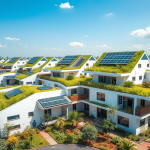
Resulting in homes that are both cost-effective and environmentally responsible.
Modular housing becomes truly powerful when combined with sustainable architectural principles.
In Kenya’s varied climates, modular homes can be designed to:
This lowers reliance on mechanical cooling and artificial lighting.
Water efficiency is critical in many parts of Kenya and Africa. Modular construction allows plumbing systems to be:
Systems such as rainwater harvesting, greywater reuse, and low-flow fixtures can be seamlessly integrated.
Off-site manufacturing significantly reduces:
This directly lowers the environmental footprint of housing projects.
Kenya is not alone. Across Africa, modular housing is being adopted to respond to urban growth and housing shortages.
What makes modular housing suitable for Africa is its adaptability designs can respond to local climate, materials, and cultural needs.
Despite its benefits, adoption is still slow due to:
Overcoming these challenges will require collaboration between government, professionals, manufacturers, and educators.

Modular housing is not a replacement for all traditional construction but it is a critical tool for addressing housing shortages sustainably.
When paired with:
Modular construction can deliver housing that is safe, affordable, scalable, and sustainable.
At Constructive Futures, we believe that better housing starts with better understanding. By exploring modular housing and sustainable architecture in real, practical terms, we aim to support informed decisions that lead to stronger homes and healthier communities.
The future of housing in Kenya and across Africa depends not just on how much we build, but how wisely we build.
By: Peter Achieng